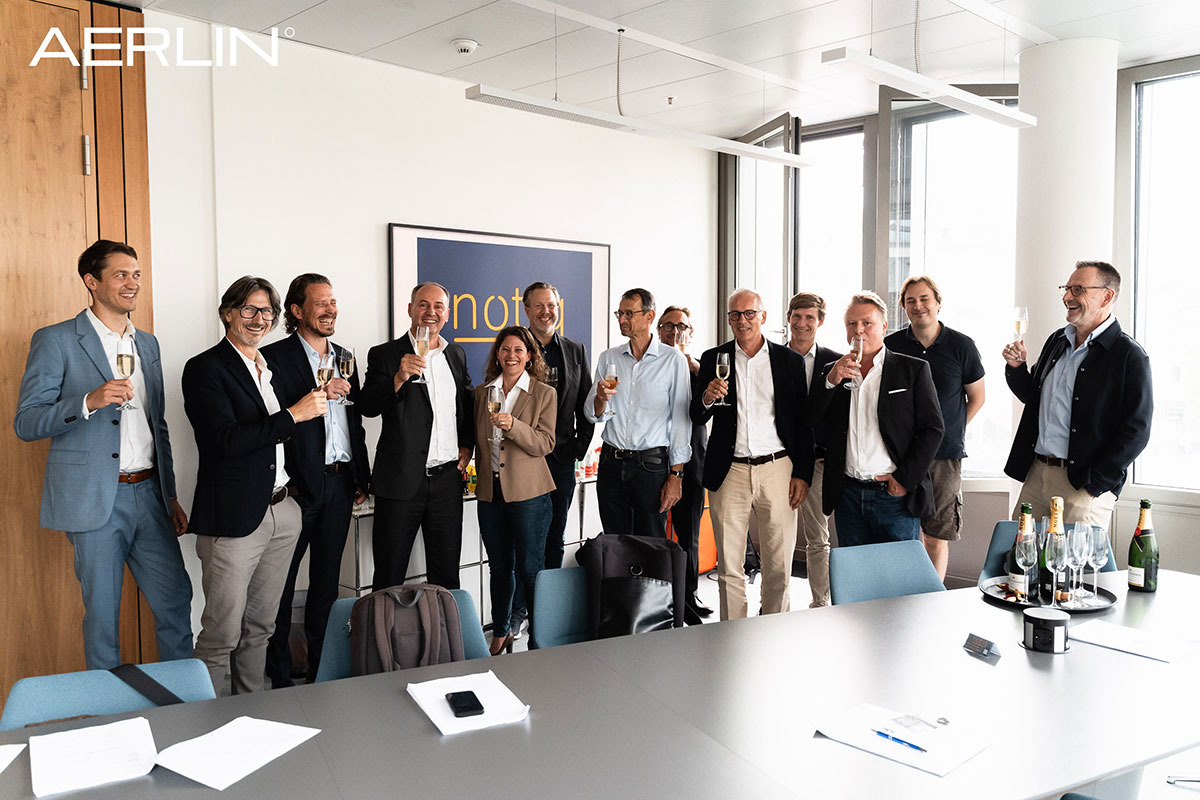
The eFUEL GROUP, based in Hoya, Lower Saxony, and LIQUI MOLY from Ulm are joining forces in a strategic collaboration. The partnership focuses on the further development of the interaction between synthetic fuels and modern lubricants and additives.
"Together, we want to optimize efficiency, performance, and engine protection under real-world operating conditions and make a measurable contribution to reducing new CO₂ emissions," says Lorenz Kiene, CEO of the eFUEL GROUP. New CO₂ emissions are emissions newly released into the air through the combustion of petroleum-based fuels. A reduction in these new CO₂ emissions is achieved with synthetic fuels, such as eFuels, by utilizing CO₂ already present in the environment during the production process. Consequently, the use of eFuels leads to a reduction of up to 90%* in new CO₂ emissions over the entire life cycle compared to fossil fuels, depending on the raw material base and supply chain. * According to a test report from the independent testing laboratory Intertek (Switzerland), a value of more than 90% was determined as part of a C14 isotope analysis.
The cooperation with lubricant specialist LIQUI MOLY targets the motorsport sector and, looking ahead, further areas of application within the mobility industry.
"We believe that the future lies in a mix of drive systems. And in this future, eFuels, which offer a significant reduction in new CO₂ emissions, can play a major role. That is why LIQUI MOLY sees potential in this joint project," explains Günter Hiermeier, Managing Director of the South German lubricant specialist. The company is interested in the development of eFuels not only in its capacity as a manufacturer of engine and gear oils. "It is also a question of the long-term use of existing vehicles. After all, there are around 1.4 billion vehicles with combustion engines in use worldwide that can continue to be driven for a long time thanks to eFuels. These modern fuels not only offer a significant reduction in new CO₂ emissions but are also compatible with today's combustion engines," the LIQUI MOLY Managing Director explains.
Another advantage is the existing infrastructure: the current network of filling stations can continue to be used. "Their ability to be used in existing fuel and mobility applications also gives eFuels a special relevance in the technological spectrum of modern fuel solutions," adds Kiene. For him, the collaboration with LIQUI MOLY is so important because engine oils have long had to do more than just lubricate. For modern engines, they have become liquid engineering components. As such, very low-viscosity oils, among others, make an important contribution for vehicle manufacturers. And eFuels provide the energy in the combustion engine. Modern engine oils ensure the lowest possible frictional resistance and thus optimal fuel efficiency. "The better the two liquid components are matched to each other, the lower the consumption," says the CEO of the eFUEL GROUP.
The same applies to additives in fuels and engine oils. They give operating fluids their specific characteristics. "And clean engines burn fuel better," says Hiermeier. LIQUI MOLY has almost 70 years of experience with additives. They were the first products from the company based in Ulm on the Danube, which has always aligned its offering with the spirit of the times and the current state of technology.
You can find detailed information here: